


The standard recommendation is 1 gallon of water per person per day — but that number is a bare minimum for survival, not comfort. Depending on your situation, climate, and household, you may need significantly more. This guide breaks down exactly how much water to store, why the math changes for different scenarios, and how to make sure your supply is actually drinkable when you need it.
The 1-Gallon Rule: Where It Comes From
FEMA, the Red Cross, and the CDC all recommend the same baseline: 1 gallon per person per day. That breaks down roughly as:
- ½ gallon (64 oz) for drinking
- ½ gallon for sanitation — handwashing, basic hygiene, minimal cooking
This is a survival figure designed for short-term emergencies. It assumes no showering, no laundry, minimal cooking, and no waste. It is not comfortable — it's adequate. For anything beyond a 72-hour emergency, plan for more.
How Much Water Do You Actually Need Per Day?
Real-world water needs vary significantly based on circumstances. Use this table to calculate your household's true requirement:
| Scenario | Gallons Per Person/Day |
|---|---|
| Bare survival minimum | 1 gallon |
| Comfortable emergency living | 2–3 gallons |
| Hot climate / physical labor | 3–4 gallons |
| Nursing mother or pregnant woman | 1.5–2 gallons |
| Ill or injured person | 1.5–2 gallons |
| Young children (under 5) | 1 gallon (same as adults — more for formula) |
| Pets (dogs, cats) | ¼–½ gallon per pet |
Practical rule: For emergency planning, most preparedness experts recommend 2 gallons per person per day as a realistic, livable baseline that accounts for cooking, hygiene, and minor margin.
How Much Water to Store by Household Size
Use these numbers to calculate your minimum water storage targets. The 72-hour column is what FEMA considers the essential baseline. The 2-week and 3-month columns are what experienced preppers actually aim for:
| Household | 72 Hours (1 gal/day) | 2 Weeks (2 gal/day) | 3 Months (2 gal/day) |
|---|---|---|---|
| 1 person | 3 gallons | 28 gallons | 180 gallons |
| 2 people | 6 gallons | 56 gallons | 360 gallons |
| Family of 4 | 12 gallons | 112 gallons | 720 gallons |
| Family of 6 | 18 gallons | 168 gallons | 1,080 gallons |
For a family of 4 aiming for a 3-month supply at 2 gallons/day: 720 gallons. That's 3,600 standard 16-oz water bottles, or about 18 fifty-five-gallon water barrels — which gives you a sense of why stackable water solutions and filtration systems matter for serious storage planning.
Water Storage Options: From Easiest to Most Scalable
1. Commercial Water Pouches and Bottles
Pre-packaged emergency water pouches (like Puravai) offer a 5-year shelf life and are ideal for 72-hour kits, go-bags, and vehicle emergency kits. They're compact, lightweight, and require zero maintenance. The tradeoff: cost per gallon is high, so they're not practical for 3-month+ storage.

2. Standard Bottled Water Cases
Cheap and immediately available. Shelf life is 1–2 years before the plastic starts to affect taste (the water itself stays safe longer). Good for short-to-medium term rotation but impractical for large quantities.
3. Water Storage Containers (5–7 gallon)
Stackable, BPA-free containers are the workhorse of home water storage. Fill with tap water, add a water preserver, and store in a cool, dark location. Plan to rotate every 6–12 months.
4. Large Tanks and Barrels (30–55 gallon)
The most cost-effective option for serious storage. A 55-gallon barrel holds about a month's supply for one person at 2 gallons/day. They require a hand pump to access and need to be stored where they won't need to be moved once full (water is heavy: 8.34 lbs per gallon).
5. Water Filtration Systems
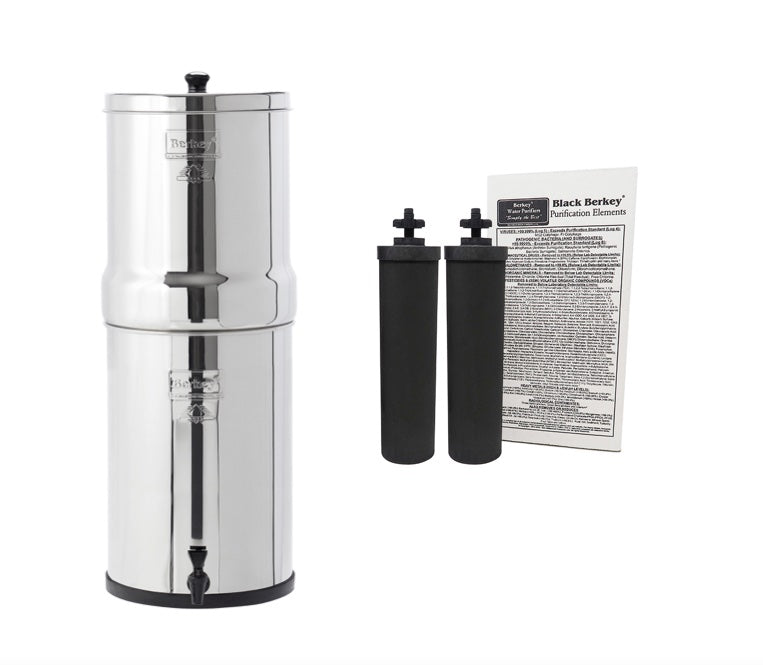
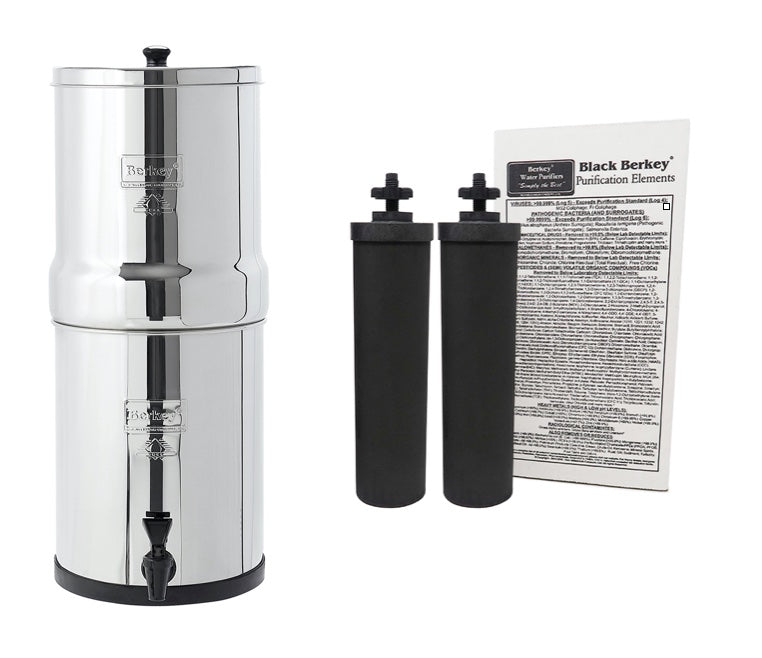
A quality water filter — like a Berkey gravity filter — is one of the smartest investments in your preparedness kit. Rather than storing all the water you might ever need, you store a manageable supply and have the ability to filter any available water source: rainwater, streams, tap water during a boil advisory. Berkey systems remove 99.9999% of bacteria, 99.999% of viruses, and a long list of contaminants including heavy metals and fluoride.
How Long Does Stored Water Last?
| Water Type | Shelf Life | Notes |
|---|---|---|
| Sealed commercial bottles | 2 years (taste); indefinitely (safety) | Plastic degrades — not ideal long-term |
| Emergency water pouches (Puravai) | 5 years | Best for go-bags and 72-hour kits |
| Tap water in clean containers | 6–12 months | Rotate regularly; treat with preserver for longer |
| Tap water + water preserver | 5 years | Products like WaterBrick Preserver extend shelf life |
| 55-gallon barrel (treated) | 5+ years | Keep sealed, cool, and dark |
Signs Your Stored Water Has Gone Bad
Water itself doesn't "expire" — but it can become unsafe or unpleasant to drink if stored improperly. Watch for:
- Algae growth: Green or brown discoloration from light exposure. Filter and treat before drinking.
- Off smell: Chemical smell from degrading plastic, or sulfur smell from bacterial growth. Filter or discard.
- Cloudiness: Usually sediment — run through a filter. If accompanied by smell, discard.
- Flat or plastic taste: Normal in older bottled water. Safe but unpleasant. Filter to improve taste.
When in doubt: run it through a Berkey or similar quality filter and it will be safe to drink.
The Smart Approach: Storage + Filtration
The most resilient water strategy isn't just storing more water — it's building redundancy:
- 72-hour supply: Emergency water pouches in every go-bag and car. Done.
- 2-week supply: 5-7 gallon stackable containers in a cool closet. Rotate annually.
- Long-term: A gravity water filter (Berkey) that can process any available water source. This effectively gives you unlimited clean water as long as you have a water source — rain, creek, tap under advisory, or pool water.
This layered approach covers you for everything from a 3-day power outage to an extended infrastructure disruption — without needing to store thousands of gallons.
Frequently Asked Questions
How many gallons of water do I need for 2 weeks?
At the FEMA minimum of 1 gallon per person per day: 14 gallons per person for 2 weeks. At a comfortable planning figure of 2 gallons per day: 28 gallons per person. A family of 4 should target 56–112 gallons for a 2-week supply.
How much water does a person drink per day in an emergency?
The absolute minimum for survival is about ½ gallon (64 oz) of drinking water per person per day. This can decrease in cool, sedentary conditions and must increase significantly in heat or during physical exertion. The full 1-gallon recommendation includes drinking plus basic sanitation.
How heavy is a gallon of water?
One gallon of water weighs approximately 8.34 pounds (3.78 kg). A 5-gallon container weighs about 41.7 lbs when full. A 55-gallon drum filled with water weighs roughly 458 lbs — which is why placement matters before filling.
Can I use tap water for emergency storage?
Yes. Tap water from a municipal supply is already treated and safe to store. Use food-grade containers, fill completely to minimize air, seal tightly, store in a cool dark place, and rotate every 6–12 months. Adding a water preserver extends shelf life to 5 years.
Is bottled water safe after the expiration date?
The date on bottled water is about plastic degradation affecting taste, not water safety. The water itself remains safe to drink indefinitely. If it tastes off after the date, run it through a water filter to improve flavor.
Build your water supply the smart way.
Safecastle carries Berkey water filtration systems, Puravai emergency water pouches, and everything you need to create a layered water readiness plan — from 72-hour go-bags to long-term home storage.
Shop Water Filtration →
Shop Emergency Water Pouches →