













Preparedness 101
What's Your "Plan A" - Bug-out or Dig in?
Is "Plan A" to "get out of Dodge" in the event of a pending or sudden crisis? Or is "Plan A"
to "bunker down" at home?
An intelligent approach to crisis preparedness planning requires consideration of specific crisis scenarios as well as individual constraints and limitations. Thinking about it before the pressure is on helps you arrive at the right decision when the time comes.
Pre-crisis, honestly assess your general options, constraints, overall risks, and best odds for surviving and thriving.
Options for most people are usually an either/or
proposition:
A. Stick it out at home where your supplies, tools, and community support network are
established.
B. Bug-out to a hoped-for relative place of safety.
Constraints and limitations might include: age
and physical condition, health factors or disabilities, family relationships and obligations,
financial restraints, household/property security, community stability, geography, climate,
road and weather conditions. You obviously need to consider these and other variables in your
planning and decision-making. (We do not attempt to include all potential variables in our
bunker-down-or-bug-out calculator.)
Best odds are arrived at by looking at the strength and position of your home and community vs. the circumstances of the crisis. For most people, "Plan A" in many events would be to "dig-in" and fortify at home. However, there ARE events when bugging out is the smart move.
Risks/Rewards are about
weighing vulnerabilities against strengths.
The specific crisis scenario is key. In general, by staying put and hunkering down, most people
can often mitigate their risks. By hitting the road to join what could be a large, agitated
traffic jam, there is inherent danger; while in transit you are especially vulnerable to
uncontrollable circumstances. Also, your planned destination must be a safe, well-supplied
haven and you should be assured of being welcomed there when you arrive. Note that refugees
often end up in government-run camps. Ultimate objective: avoid the chaos.
Bug Out Or Dig In? Calculate Your Best Option
Select the options that best describe your situation. Then, choose a type of crisis scenario. The bunker-down-or-bug-out calculator will then produce a simple comparison of whether it makes more sense, generically speaking, to leave versus staying put and attempting to "ride out" the selected crisis.
Take flight or sit tight? It's your call, but be smart about it - it could be a life or death decision.
To begin, place a check next to each option that describes your particular situation.
I have a secure, well-built, defensible home.
A sturdy home can make a tremendous difference in whether staying put is a sound option.
I have a storm shelter, fallout shelter, or saferoom
built into my home or on my property.
Sometimes it makes more sense to either reinforce a single room or part of a home, or
install a separate emergency shelter, than to reconstruct an existing dwelling.
I have reliable transportation of some form.
The key here is "reliable" - even a bicycle is a useful mode of transportation if it's
reliable. Define "reliable" in the context of this discussion as "it'll get you where
you need to go, when getting there matters."
I have a stored fuel supply, with two months or more
of capacity.
If it's not people-powered, your transportation method will need fuel. Having a fuel
supply, properly stabilized for long-term storage, can make a huge difference in the
practicality of "heading for the hills."
I have some form of alternative electrical source, such
as a solar system or a generator, but my power source has a capacity of less than four
kilowatts (4,000 watts).
Electrical power can be taken out by certain types of crises, and infrastructure
destruction means restoration can take a long, long time.
I have some form of alternative electrical source, such
as a solar system or a generator, but my power source has a capacity of four
kilowatts (4,000 watts) or more.
More power capacity means a less radical departure from the norm in a crisis situation.
I have a stored supply of shelf-stable food, with
enough to provide at least 2,000 calories per person for a minimum of two months.
Food is an important consideration, and a considerable consumer of usable space.
I have a source for potable fresh water, and the
tools and equipment needed to purify it for safe drinking.
Water is actually more important than food when it comes to long-term survival, as you
can survive for weeks without food but only days without water.
I have a supply of stored water capable of providing at
least 5 gallons per person per day for at least two weeks.
When a supply isn't available, or as a backup plan or buffer, having water on hand beats
the alternative.
My current location is urban (e.g., within, or within a fifteen-minute
walk from, a major metropolitan area).
City life has advantages and disadvantages, and in a crisis situation the cons are considerable
compared to the pros.
My current location is in a suburb (e.g., at least fifteen
minutes of walking time away from a major metropolitan area).
Suburban life removes some of the cons of life in a big city.
My current location is in a rural setting (nowhere near a
major metropolitan area).
Rural life has a lot of advantages when it comes to survivability, but it's not for everyone.
I have strong local community support, such as a well-
organized neighborhood watch program, church outreach programs, or friends and relatives
that live closeby.
It takes a village to actually be a village, and no man is an island. Facing a crisis can
often be easier when done as a group.
I have access to an advance-warning system, or have
one in place.
Knowledge is power, and timing is everything.
Now, select a crisis situation that could come to pass.
Based on your situation and selected crisis, the Bunker-Down-Or-Bug-Out meter below shows
which option may make more sense from a relative point of view, where the worse course of
action is shown as a percentage of the better.
Please note that there are other factors to consider that are beyond the scope of this rather simplistic calculation, so always consider emergency responses and planning carefully.
Bunker Down! Bug Out!
Stay: 0 Go: 0
Legal Disclaimer: This information is not meant to provide definitive advice in the event of life-threatening disasters. It is presented for entertainment and discussion purposes.
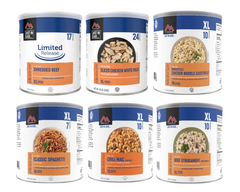
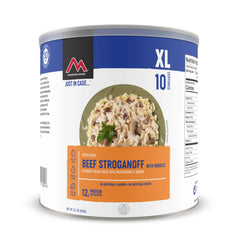
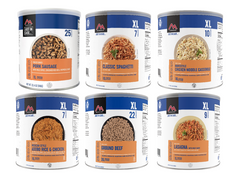
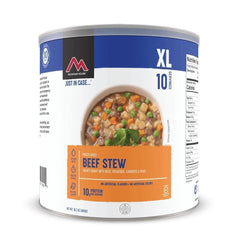
Prepare and fortify with Safecastle-the leading online crisis-preparedness provider. Long-term
emergency storage food, including Mountain House freeze dried food, 100-year steel-plate
survival shelters, and primo life-saving gear and supplies. Ten years in business, with a
sterling customer service reputation:
www.safecastle.com
Like us on Facebook for a chance to win prizes monthly: www.facebook.com/Safecastle